
Understanding Circularity
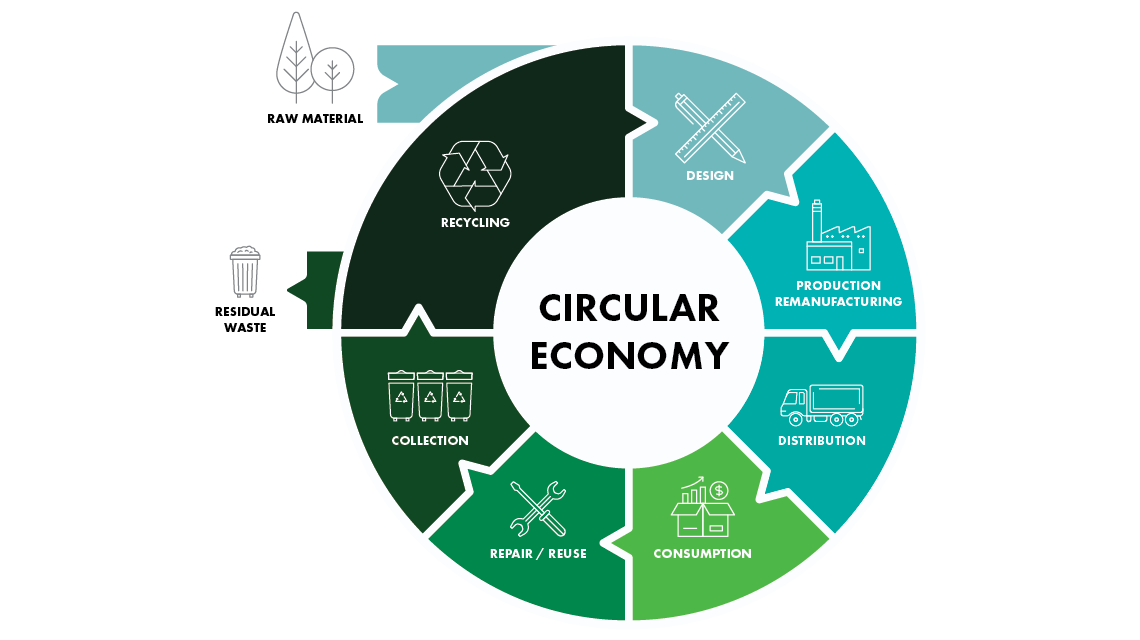
Our current consumption model follows a simple pattern: Take → Make → Throw. Unfortunately, this linear model is depleting natural resources at an alarming rate. The circular economy offers a different path—one where resources are continuously reused, repurposed, and reintegrated into the system.
Why It Matters Now
- Resource Scarcity: By 2050, we may need three Earths to sustain our lifestyle if consumption continues unchecked.
- Climate Change: Waste generation and resource extraction contribute directly to greenhouse gas emissions.
- Economic Opportunity: Circular systems open new avenues for green jobs, innovation, and community resilience.
Circular Living in Everyday Life
The circular economy is not just a corporate strategy—it’s something each household can embrace:
- Repair instead of replace: Fix electronics, shoes, or clothes before discarding.
- Share and exchange: Community libraries, carpooling, or tool-sharing reduce redundant ownership.
- Redesign consumption: Choose durable products over disposable ones.
Earthtree’s Role in Driving Circularity
Through tailored programs, Earthtree empowers institutions and individuals to rethink waste. By building awareness campaigns, facilitating community collaborations, and guiding businesses toward zero-waste models, the organisation transforms theory into practice.
The Call to Action
Circularity is not an option for tomorrow—it’s a necessity for today. Each of us has a role to play in shaping a future where sustainability is not a burden but a way of life.
When we stop treating waste as “end of life” and start seeing it as “new beginnings,” we step closer to a truly sustainable world.